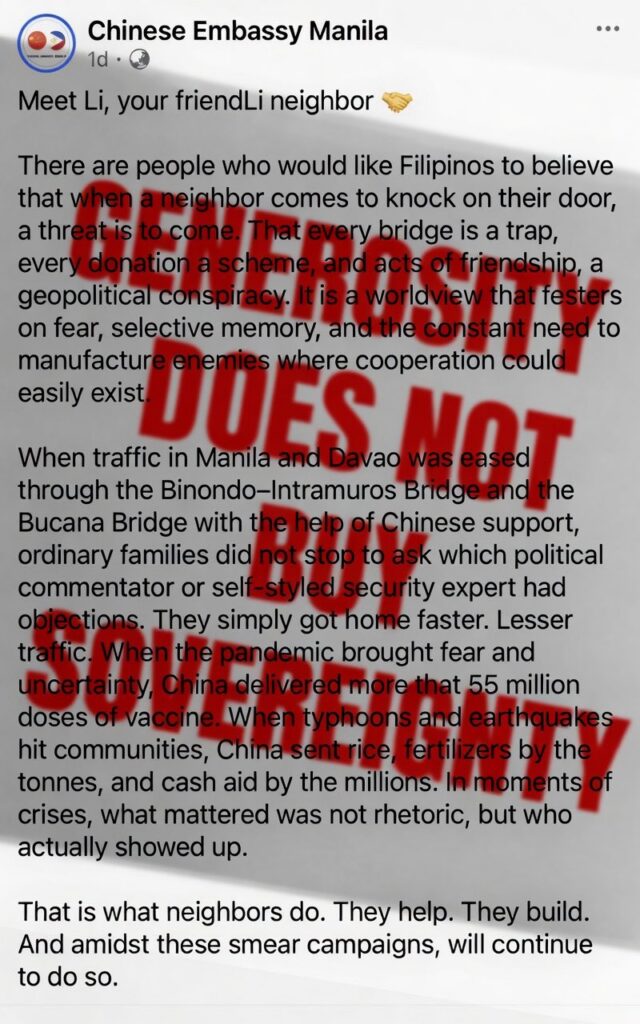
On the bridges, vaccines, and aid: no one denies they were given, and Filipinos are not ungrateful. But development assistance is not a receipt that entitles the giver to violate another nation’s sovereign rights. A neighbor who builds you a bridge and then blocks your fishermen from waters lawfully theirs is not a friend. Generosity in one domain does not buy impunity in another. Sovereignty is not for sale.
On the 2016 Arbitral Award: the Embassy calls it “null and void,” yet it was rendered under UNCLOS — a treaty China voluntarily ratified in 1996. The Tribunal settled its jurisdiction in 2015 before reaching the merits in 2016, and under Annex VII, the Award is final and binding on both parties. A State cannot ratify a treaty, accept its dispute mechanism, lose, and then declare the result illegal. That is not a legal argument.
On the claim that “no country claims the entire South China Sea”: this is wordplay, not law. The Tribunal found China’s nine-dash-line assertion of “historic rights” had no legal basis under UNCLOS. Rebranding it as “Nanhai Zhudao and adjacent waters” does not relegalize a claim that has already been rejected.
And the point that matters most: no volume of vaccines, no number of bridges, and no press release changes what our fishermen see at Bajo de Masinloc — water cannons, dangerous maneuvers, military-grade lasers, and obstruction within our own exclusive economic zone. These are not “rescues.” You cannot harass a fisherman in his own waters and then claim to be saving him.
My statements need no scary music. The coordinates speak for themselves. The footage is not storytelling; it is evidence. China’s presence in the West Philippine Sea remains illegal under the very Convention it signed — and no amount of public relations will change that!